This story is about Yulu. InSnaps has no commercial relationship with them.
In short: Yulu raised $93 million in August 2026, of which $63 million is equity and $30 million debt. About 95% of its revenue now comes from renting electric two-wheelers to gig delivery riders, and it ended FY25 with under Rs 10 crore of cash.
- What it is
- A fleet-rental business leasing low-speed electric two-wheelers to gig delivery riders, with a small consumer rental remnant
- Founders
- Amit Gupta (CEO, an InMobi co-founder), RK Misra and Naveen Dachuri (CTO); CFO Anuj Tewari was named a co-founder in 2023
- Founded
- August 2017, headquartered in Bengaluru
- The August 2026 round
- $93 million led by GEF Capital Partners, comprising $63 million equity and $30 million debt, of which about $5.5 million bought out seed investors
- Who did not participate
- Bajaj Auto and Magna International, both existing strategic investors, waived their pre-emptive rights
- Reported valuation
- About $170 million post-money, attributed to unnamed sources and not confirmed by Yulu
- Revenue mix
- Around 95% of revenue comes from renting to gig workers, not consumer bike-share
- The regulatory keystone
- The core fleet is capped at 25 km/h with a 250W motor, which exempts it from registration and driving licence requirements
- FY25 financials
- Operating revenue Rs 237.4 crore, up 98%; net loss Rs 126 crore, down 12%; cash and bank balance Rs 9.65 crore, down 93%
- Fleet and cities
- About 50,000 vehicles across 12 cities, four company-operated and eight franchised, with a stated target of 200,000 vehicles in two years
- Verification status
- FY25 figures are from filings; the valuation, fleet targets, EBITDA-positive claims and Yuma station counts are company-stated and mutually inconsistent
Yulu launched in 2017 as dockless electric bikes you unlocked with an app for a few rupees a minute — the Indian entry in a global category that has since produced one of the most complete graveyards in venture capital.
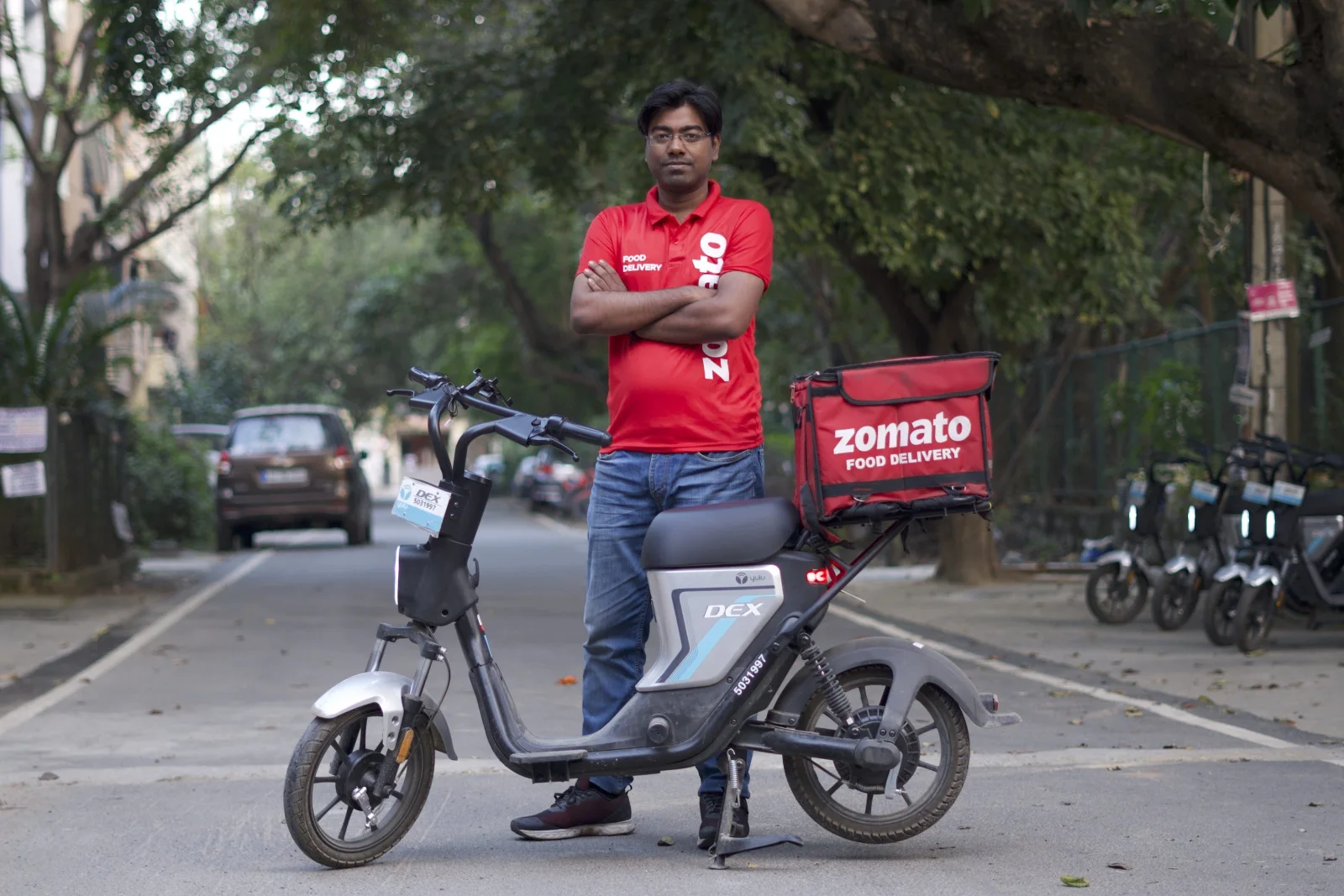
It is not that company any more. About 95% of Yulu’s revenue now comes from renting electric two-wheelers on weekly subscriptions to gig delivery riders. Amit Gupta, the CEO, puts it flatly: ”Our customer is a gig worker.” The per-minute commuter product survives mainly as a station-based service in Bengaluru.
That pivot is why it is still alive, and it is also the thing worth examining in the $93 million it raised this month.
The round, read properly
Most headlines said “Yulu raises $93 million.” The composition matters more than the total:
- $63 million equity, $30 million debt — not a $93 million equity round
- About $5.5 million of the equity bought out seed investors — secondary, not money into the business
- Led by GEF Capital Partners, a US climate-focused firm
- Reported at a ~$170 million post-money valuation, attributed to unnamed sources and not confirmed by Yulu
And the detail that deserves more attention than it got: Bajaj Auto and Magna International did not participate, and both waived their pre-emptive rights. Bajaj manufactures Yulu’s low-speed fleet. Magna controls the battery-swapping network Yulu depends on. Those are the two investors who understand the business best, and both declined to increase their stake.
Against roughly $200 million-plus raised across a dozen rounds since 2017, a ~$170 million post-money is flat at best. Yulu never officially disclosed its 2022 Series B valuation, so “down round” is an inference rather than a fact — but it is not a strained one.
What Yulu actually sells
The product is vehicle-as-a-service for people who cannot buy a vehicle.
An entry-level electric scooter costs Rs 70,000 to Rs 1,00,000-plus. Gig income is volatile, often seasonal, frequently migrant, and rarely bankable — riders lack the credit history to finance a purchase. Churn in quick-commerce fleets is high, so a rider may need a bike for six weeks rather than six years. Yulu converts that capex into roughly Rs 1,000 a week of opex and absorbs maintenance, insurance and the vehicle’s residual-value risk.
There is a second, less discussed reason the model works, and it is regulatory. The core fleet is capped at 25 km/h with a 250W motor, which under Indian motor vehicle rules exempts it from registration and from any driving licence requirement. That is what lets Yulu put a new, unlicensed rider on a road-legal vehicle the same day. No amount of financing innovation replicates it.
Then there is charging. For a delivery rider, charging time is unpaid downtime — a three-hour charge kills a shift, a swap takes about two minutes. Swapping also separates the battery, the most expensive and fastest-degrading component, from the vehicle, so packs can be amortised across a fleet.
That network is Yuma Energy, and Yulu does not control it: Magna holds 51% against Yulu’s 49%, having put in around $52 million of cash to Yulu’s assets and IP. Magna consolidates it. Yuma has since partnered with HPCL to place swap stations across its retail forecourts, and has said it expects non-Yulu business to reach 25% of its volume. Yulu is the anchor customer of its own energy layer, not its owner.
Customers named by the company include Zomato, Swiggy, Zepto, Blinkit, Amazon and Flipkart.
The audited numbers
| FY24 | FY25 | |
|---|---|---|
| Operating revenue | Rs 119.9 cr | Rs 237.4 cr (+98%) |
| Net loss | Rs 142.8 cr | Rs 126 cr (−12%) |
| EBITDA margin | (80.1)% | (15.3)% |
| Cash and bank balance | Rs 142.7 cr | Rs 9.65 cr (−93%) |
Revenue nearly doubled and the EBITDA margin improved dramatically — from minus 80% to minus 15%. That is real operational progress and it should be said plainly.
The line that reframes the fundraise is the last one. Cash fell 93% to under Rs 10 crore by the end of FY25. Read against that, the August round looks less like an expansion war chest and more like a necessity — which is also the most plausible explanation for accepting a flat valuation and a third of the money as debt.
Gupta has said he wants this to be the last equity raise before an IPO at Rs 1,000–1,200 crore of revenue.
Where the doubts sit
The category’s record is dreadful. Bird raised over $1.1 billion, burned $650 million across 2020–22, delisted, filed Chapter 11 in December 2023 and sold for around $145 million against a former $2.5 billion valuation. Superpedestrian died. Uber sold JUMP to Lime at a loss; Ford shut Spin. In India, Bounce shut its scooter-sharing service outright and cut 5% of staff. Yulu itself wound up Ahmedabad in 2022 and has retreated from owning operations in most cities, running eight of its twelve through franchisees.
Yulu’s honest defence is that it is not that business: a B2B fleet lease with a named commercial counterparty per vehicle is a different asset than a scooter left on a pavement for anyone to kick over. That difference is real. It does not make the business asset-light.
The capex arithmetic is tight. Going from 50,000 to 200,000 vehicles means buying 150,000 machines. At even Rs 40,000–50,000 each that is Rs 600–750 crore, against $63 million of new equity. More debt is implied.
Customer concentration is the structural risk. Yulu’s revenue is a cost line for quick-commerce platforms that are themselves burning cash and under intense pressure to cut cost lines. Those platforms could bring logistics in-house or squeeze rates, and Yulu has limited leverage if they do.
Riders could simply buy. The rental thesis holds only while Rs 1,000 a week beats ownership. Sub-Rs 70,000 e-scooters with swappable batteries now exist — including Bounce’s Infinity E1 and Yulu’s own retail Wynn, which means Yulu sells a product that competes with its own rental book.
The regulatory keystone could move. The 25 km/h exemption is the foundation of the model. EVreporter has documented safety concerns with registration-exempt low-speed EVs, including speed governors being removed so vehicles exceed 35 km/h. A licence requirement, a registration mandate or speed enforcement would hit the business directly.
Theft and damage are undisclosed. Yulu relies partly on community tip-offs for suspected theft and has fitted GPS and sensors; Bengaluru press has covered rental operators’ problems with theft of spares and vandalism. No loss or write-off rate is published.
What we could not verify
No unit economics of any kind are public — per-vehicle revenue, utilisation, payback period, battery replacement cost, rider churn, or damage write-off rates. This is the information that would settle whether the model works, and none of it is disclosed.
The ~$170 million valuation has no primary confirmation.
FY26 accounts are not filed, so every FY26 claim is company-supplied.
The profitability claims contradict each other. “EBITDA-positive since April 2025,” “operationally profitable since April 2024,” a report of turning EBITDA-positive in October 2024, and a self-description as EBITDA-profitable “in 2024” cannot all be true — and FY25 closed at minus 15.3% EBITDA margin, which sits awkwardly with any of them.
Yuma’s station count is not credible as stated. 350 stations serving 45,000 customers a day was reported in May 2026; “over 2,000 stations across 17 cities” appears in later partnership material. A near six-fold increase in three months needs explaining.
Total funding raised is reported as $142 million, $198 million and $228 million by different trackers. Headcount appears as 238, 251, 400 and 761. Yulu publishes neither.
We found no evidence of Yulu layoffs, and are noting that explicitly because the Indian micromobility layoff record belongs to Bounce.
Why this is on our desk
Because the interesting thing about Yulu is not electric mobility. It is that a company survived a category wipeout by finding the one customer who genuinely cannot buy the asset — and that its viability now rests on a 25 km/h regulatory exemption and on the unit economics of quick-commerce platforms that are themselves unprofitable.
Two dependencies, neither of which Yulu controls, and it does not own the battery network either.
FAQ
What does Yulu do now?
It rents low-speed electric two-wheelers to gig delivery riders on weekly subscriptions — about 95% of revenue. The original per-minute consumer bike-share survives mainly as a station-based service in Bengaluru.
How much did Yulu raise in 2026?
$93 million, announced in August 2026 and led by GEF Capital Partners. It breaks down as $63 million equity and $30 million debt, with roughly $5.5 million of the equity used to buy out seed investors. Reported post-money valuation is around $170 million, which Yulu has not confirmed.
Is Yulu profitable?
No. FY25 showed a net loss of Rs 126 crore on Rs 237.4 crore of revenue, with an EBITDA margin of minus 15.3%. The company has made several claims about being EBITDA-positive at various dates, and those claims contradict each other and the filed figures.
Why do delivery riders rent instead of buying?
An electric scooter costs Rs 70,000 or more, gig income is volatile and often unbankable, and rider churn is high — someone may need a vehicle for six weeks. Rental converts that into about Rs 1,000 a week and includes maintenance and insurance. Crucially, Yulu’s 25 km/h vehicles need no licence or registration, so a new rider can start the same day.
What is Yuma Energy?
The battery-swapping network Yulu’s fleet depends on, run as a joint venture in which Magna holds 51% and Yulu 49%. Magna controls it, and Yuma is deliberately diversifying its customers beyond Yulu.
Why does battery swapping matter more than charging?
Charging time is unpaid downtime for a delivery rider — hours off the road against about two minutes for a swap. Swapping also decouples the battery from the vehicle so packs can be amortised across a fleet, which matters because the battery is the most expensive and fastest-degrading part.
Sources
Checked on 23 August 2026. FY25 figures come from RoC filings as reported by multiple outlets; the valuation, targets and operating claims are company-stated or attributed to unnamed sources, as noted.
- TechCrunch — the round, its equity and debt split, the secondary component, and the Bajaj and Magna abstention: <https://techcrunch.com/2026/08/11/indias-yulu-raises-93m-as-quick-commerce-boom-fuels-e-bike-demand/>
- Entrackr — FY25 revenue, loss and cash position from filings: <https://entrackr.com/fintrackr/yulu-revenue-jumps-98-in-fy25-losses-stand-at-rs-126-cr-10831384>
- Inc42 — corroborating FY25 coverage: <https://inc42.com/buzz/yulu-cuts-its-fy25-loss-by-12-to-inr-126-cr-revenue-doubles-yoy/>
- Laffaz — the flat-to-down valuation analysis and capital-intensity argument: <https://laffaz.com/yulu-93-million-series-c-gef-capital-ev-fleet/>
- Yulu — founders, fleet, cities and product range: <https://www.yulu.bike/about>
- Smart Cities Dive — Bird’s bankruptcy, as category context: <https://www.smartcitiesdive.com/news/bird-files-chapter-11-bankruptcy-shared-micromobility-escooters/703087/>
- Autocar India — Bounce shutting its sharing service: <https://www.autocarindia.com/bike-news/bounce-shuts-down-ride-sharing-service-lays-off-5-workforce-426898>
- EVreporter — safety concerns with registration-exempt low-speed EVs: <https://evreporter.com/low-speed-evs-safety-concern/>
Yulu was not contacted before publication and has not commented. If the company will publish per-vehicle unit economics, reconcile its EBITDA-positive dates, or confirm the valuation, we will update this page.